
January arrives with good intentions and a back that may not feel ready. Long drives, soft sofas, standing in kitchens, and cold mornings can leave the lower back tight and touchy. This month we slow the pace, choose movements that genuinely help, and rebuild support where it matters. The focus is low back care with steady core work so you feel safer and stronger in everyday life.
Think of it as giving your body a plan when it would otherwise guess. We will create a little more room through the hips and the backs of the legs so the lower back does not have to compensate. We will switch on quiet strength through the deep core and glutes so lifting, walking, and bending feel less like a risk and more like a normal part of your day. Sessions are simple to follow, kind on energy, and designed to fit a real week.
Daily life is where the payoff shows up first. Standing from a chair without bracing. Reaching down to pick up a bag without holding your breath. Turning to check your blind spot without that familiar tug. Climbing stairs and feeling the legs do their job while the back stays calm. Small changes like these are the reason for the plan, and they arrive quickly when you keep showing up.
You will not need to chase big ranges or fancy shapes. We build warmth, move the joints in ways they recognise, then add a little controlled strength so the change lasts after you step off the mat. Knees can stay soft in folds. Short holds beat long struggles. Breathing stays even. If something feels sharp, we scale it back and keep moving. Progress is a measured thing here and that is exactly why it works.
The month follows a gentle rhythm. We start with movements that make stiff mornings friendlier, especially around hips, hamstrings, and the upper back. Once things feel less stuck, we add short sets for core and glutes so the pelvis is supported. Later in the month the pieces come together in calm flows that build heat without rush. You will also see restful finishes that settle the system so sleep is easier and recovery feels real.
Back Basics, a 7 day kickstart
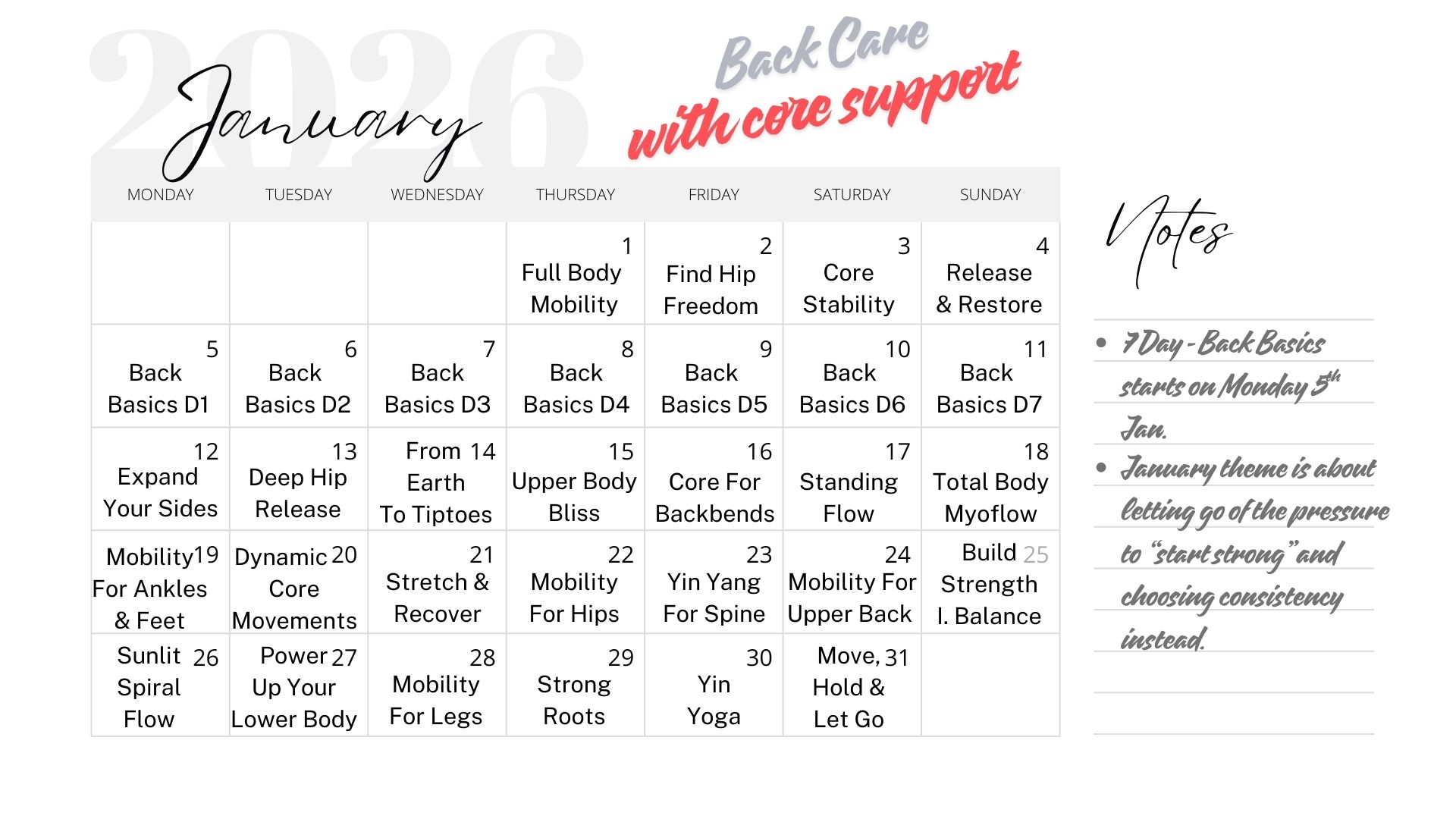
On the 5th, we’ll start a mini series called Back Basics for seven days. Seven short sessions that target common reasons backs feel grumpy, each one linked to everyday wins.
Day 1, core wake up. When the deep core switches on, standing and turning feel supported. You will notice less gripping through the lower back when you get up from a chair or lift something light.
Day 2, front of hips ease. Softer hip flexors change how you stand and walk. The pelvis sits more neutrally so long days on your feet and simple step throughs feel calmer on the back.
Day 3, glutes that help. When the big movers in the hips join in, stairs, hills, and getting out of the car feel stronger and steadier. The back no longer has to push where the hips should lead.
Day 4, longer back line. A bit of give through the backs of the legs makes tying laces, loading the washing, and any forward reach feel friendlier. The spine can stay long instead of rounding more than it wants to.
Day 5, smoother spine. Gentle flex, extend, and rotate so you twist to look behind you without a jab, roll out of bed with ease, and reach high shelves without bracing.
Day 6, open the upper body. A clearer chest and upper back means your posture asks less from the lower back. Screens, driving, and cooking feel lighter because support is shared higher up.
Day 7, deep stabilisers. Quiet control through the centre brings everything together. Everyday transitions, standing up, carrying a bag, turning, feel coordinated and safe without effort.
Miss a day. No problem. Step back in with the next class. The plan is a guide, not a test. If a week turns busy, choose the shorter option and carry on. If you have more time, loop a favourite combination. The point is to keep the body in friendly conversation with movement, not to tick boxes.
If your back is sensitive right now, you are still welcome. Keep ranges modest and choose ease over depth. Many shapes have a floor version so you can continue without worry. If bending forward tends to complain, make your stances shorter and hinge with a long spine. If standing balance feels wobbly, a light fingertip on a chair for a moment can help, then let go when you are ready. You can adjust without losing the thread of the practice.
Lower back comfort is rarely about one muscle. When hips glide, the pelvis moves without dragging the spine along. When hamstrings have a bit of give, tying your laces stops asking the back to round more than it wants to. When ankles bend well, walking feels smoother and the knees behave. When the upper back turns freely, the lower back is not asked to twist. When the deep core wakes up, the whole middle has something to lean on. This is why the plan touches each link in the chain across the month.
Breath helps everything land. We will keep it simple. Notice it. Lengthen the out-breath a touch when you are ready. The body reads that as a signal to soften, and suddenly the movement you were wary of feels possible. A few rounds like this and the shoulders start to drop on their own.
Inside the membership you will find a full calendar for January so you can press play and go. If you are short on time, choose a focused piece. Want a bit more, take a calm flow and add a few minutes of stretching to finish. There are now more than one hundred and sixty classes in the library and fresh ones arrive regulary, so you can keep this work going long after the month ends.
If you are new here, welcome. You can filter by time, focus, and style, then bookmark the classes you love for quick access next time. If you would like a very clear start, the four week beginner course lives in the Progress Packs. Short classes with simple cues. Many long time members return to it when they want to reset and tidy their movement.
A few practical tips make a big difference. Put your mat somewhere you can see it. Decide tomorrow’s practice window today and protect it like a small appointment. If ten minutes is all you have, that still counts. Warm socks and a blanket are allowed. Keep your phone on do not disturb. When you finish, write one line about what felt better. Hips freer. Back calmer. Breath deeper. Those notes build belief faster than willpower ever could.
If you feel ready for a bit of strength, the month will meet you there. We include slow eccentric lowers, careful standing work, and light core sets that ask for control, not speed. You will recognise the difference in daily life when a box feels easier to lift or a longer walk feels natural again. If you prefer softer days, lean into the restorative finishes and the upper back releases. Your body will tell you what it needs when you start listening.
This is also a good time to check the little habits that keep backs happier. When you sit, keep feet grounded and let the ribs relax. When you stand, share your weight across both feet and soften the knees. When you bend, hinge from the hips and keep the spine long. None of these ideas are new. Practised often, they turn into the way you move without thinking.
I am here to help you choose wisely. If something feels unclear, send a note and I will point you to a class that matches your day. If a shape never feels quite right, tell me and I will suggest an alternative that keeps the intention but suits your body better. Your feedback shapes what I record next, and this month is built to support you where you most need it.
If you are reading and you are not yet a member, January is a kind place to begin. You will get the calendar for the month, access to the full library, and the Progress Packs for extra structure when you want it. You can practise once a week or most days. Everything you do adds up.
Roll out your mat. Take a calm breath in and a longer breath out. Start with the small version and let it be enough. Little by little, your back will feel safer, your movement will feel freer, and the rest of your day will feel easier. I am looking forward to moving through January with you.
Best wishes,
Ayse